
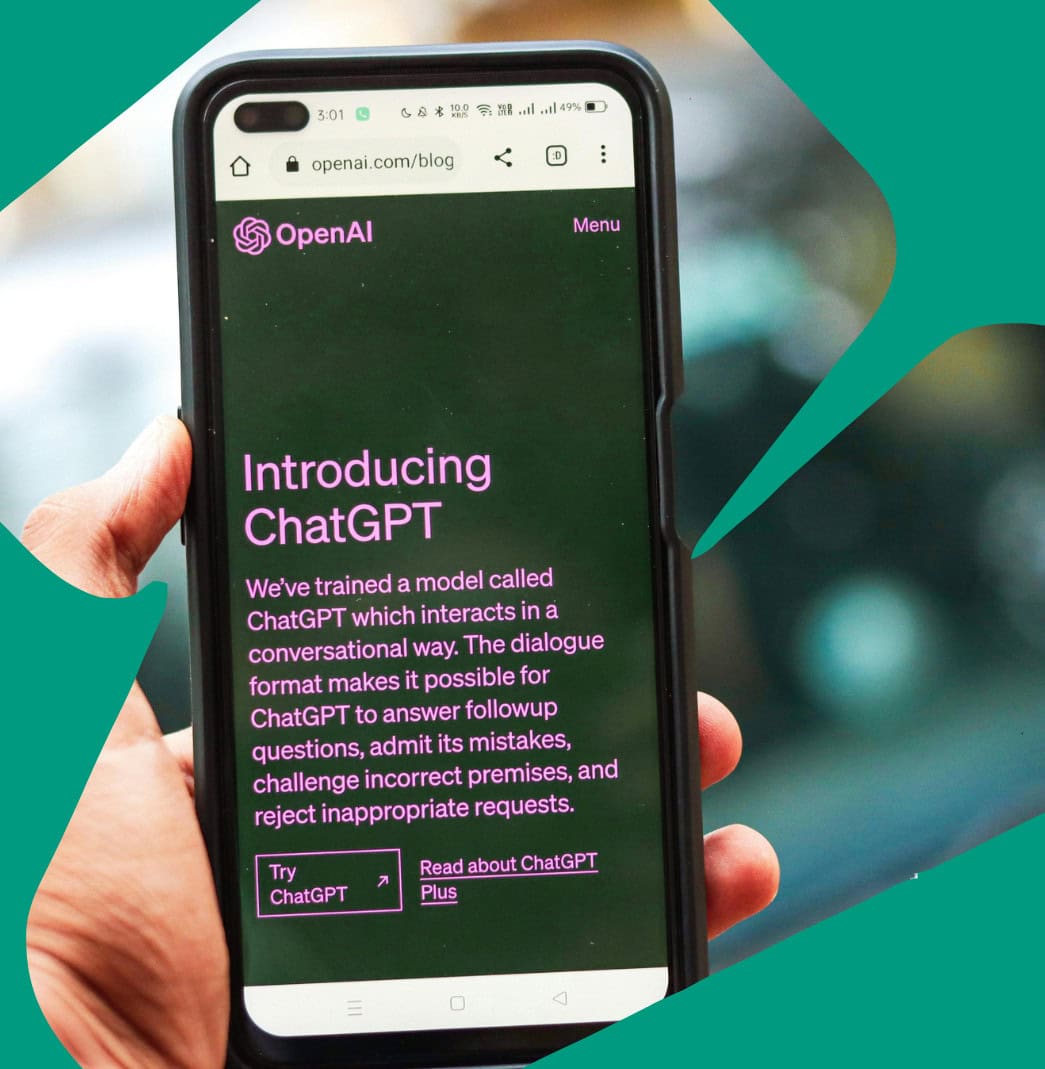
When OpenAI CEO Sam Altman recently published a paper arguing that our economic systems may not be equipped for the changes artificial intelligence is about to unleash, it sparked plenty of debate.
Some commentators focused on the politics. Others jumped straight to questions about universal basic income, taxation and the future of capitalism.
At Zest, that’s not what caught our attention.
What struck us was that one of the people building this technology is publicly acknowledging something many leaders are only just beginning to grapple with: AI isn’t simply another technology transformation. It has the potential to fundamentally change the relationship between people, work and value creation.
Whether Altman’s predictions prove accurate is almost beside the point. The questions he raises are already showing up in boardrooms, executive teams and leadership discussions today.
And from our perspective, the conversation isn’t really about AI.
It’s about work.
AI Has Changed How We View Work
For the last few years, much of the public discussion around AI has centred on jobs. Which jobs are safe? Which jobs are at risk? Which professions will disappear?
While understandable, we think this framing misses something important.
Jobs are not the thing that’s changing. Work is.
Most jobs are made up of dozens of different activities. Some require deep expertise and judgement. Others involve coordination, administration, analysis, reporting or communication. Historically, we’ve bundled all of those activities together into a single role and treated them as inseparable.
AI challenges that assumption.
What we’re seeing already is that some tasks can be automated. Others can be completed faster, more consistently or with greater insight when supported by AI. At the same time, activities that rely on human judgement, relationship building, leadership, creativity and navigating ambiguity become even more valuable.
The result isn’t necessarily fewer jobs. It’s different jobs.
That’s why we believe organisations that focus solely on headcount reduction are likely to miss the bigger opportunity. The real challenge isn’t deciding which roles to remove. It’s understanding how work itself needs to evolve.
The AI Revolution and Strategic Work Design
In many ways, this reminds us of previous industrial revolutions. New technologies have always changed work. What feels different this time is the speed and the nature of the change. AI isn’t just automating physical tasks. It’s increasingly capable of supporting the kind of cognitive work that has traditionally been the domain of professional, technical and knowledge-based roles.
For leaders, that creates a much more complex challenge than simply implementing new technology.
It requires asking some uncomfortable questions:
- What work genuinely creates value in our organisation?
- Which activities are essential, and which exist because of historical processes, structures or habits?
- How much of our workforce is focused on creating value versus coordinating, reporting and managing information?
- And perhaps most importantly, if AI can perform some activities faster and more effectively than humans, where should we be directing our people’s energy and capability?
These are not technology questions. They are work design questions.
This is where we believe many organisations are currently at risk of focusing on the wrong thing. Across the market, we’re seeing significant investment in AI tools, pilots and platforms. Yet comparatively little attention is being given to redesigning the work those tools are intended to support.
Technology is often layered on top of existing structures rather than prompting organisations to rethink those structures altogether.
The organisations creating the most value from AI are approaching the challenge differently. Rather than starting with the technology, they’re starting with the work. They’re mapping how value is created, identifying where human effort is currently spent and asking which activities should be automated, augmented or retained as distinctly human.
A New Era for HR Leaders
This shift towards AI has significant implications for HR leaders.
For years, many HR functions have focused on workforce management, capability development and employee experience. Those responsibilities remain important, but the conversation is broadening.
Increasingly, HR leaders are being asked to contribute to discussions about organisational design, job architecture, workforce planning and the future shape of work itself. In our view, this is one of the most exciting opportunities the profession has seen in decades.
The future of HR isn’t simply about managing people. It’s about helping organisations design work.
That distinction matters. Because when work changes, everything else follows. Roles change. Capabilities change. Career pathways change. Leadership expectations change. Organisational structures change.
This is also why we’re seeing renewed interest in areas such as job architecture and operating model design. Historically, many organisations viewed these as occasional projects or compliance exercises. Today, they are becoming strategic capabilities.
If work is changing faster than ever before, organisations need a much clearer understanding of how work is structured, where value is created, and what capabilities will be required in the future. Without that foundation, it becomes increasingly difficult to make informed decisions about workforce investment, AI adoption or organisational redesign.
The Executive Challenge: Human Intelligence Over AI
For CEOs and executive teams, the challenge is equally significant.
The temptation is to treat AI as a technology project. Something owned by IT, digital or innovation teams. We believe that would be a mistake.
The organisations that thrive over the next decade will not necessarily be those with the most advanced AI tools. They will be those who are most deliberate about how work is designed, how technology supports people and where human capability is directed.
In that sense, the future of work may have less to do with artificial intelligence and more to do with human intelligence.
The ability to exercise judgement. Build trust. Lead through ambiguity. Foster creativity. Solve complex problems and navigate competing priorities.
Those capabilities are not becoming less important. If anything, they are becoming more valuable.
Shaping the Future of Work
That brings us back to Altman’s paper.
The most interesting question it raises isn’t whether AI will replace jobs. It’s whether organisations are prepared to rethink work itself.
Because the defining workforce question of the next decade may not be “How do we implement AI?”
It may be: “What should humans do in an organisation where intelligence is increasingly abundant?”
The organisations that answer that question well won’t simply adapt to the future of work.
They’ll help shape it.